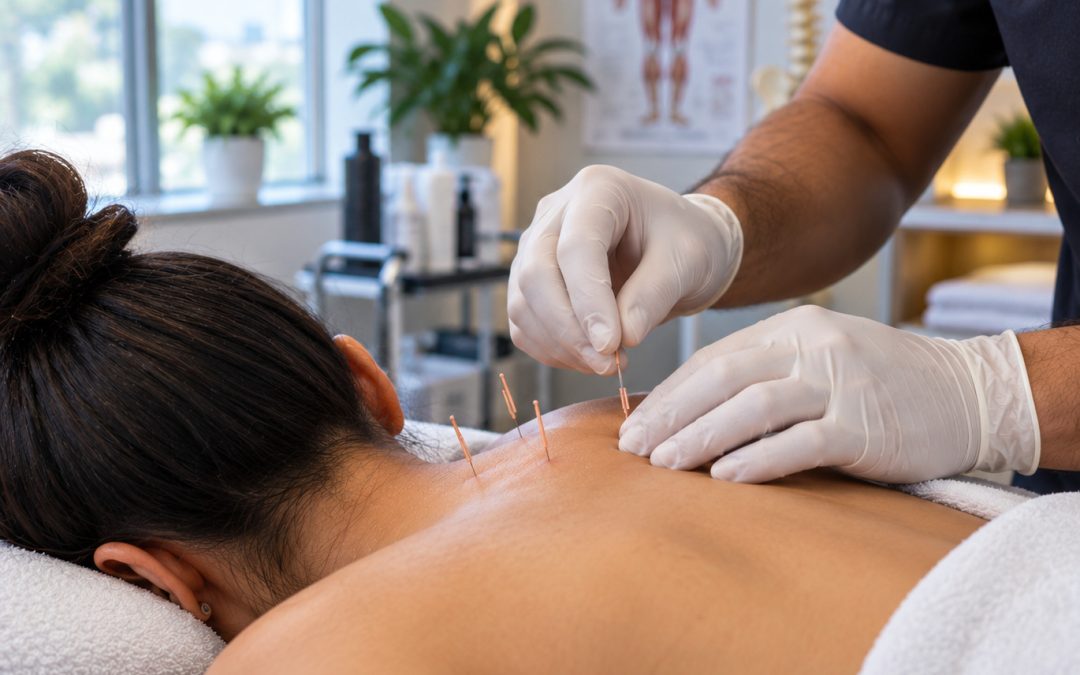
What Is Dry Needling?
Dry needling is a physiotherapy technique in which a thin, sterile, solid needle is inserted into
selected muscles, commonly targeting areas of increased muscle tension or myofascial trigger
points.
Unlike an injection, no medication or fluid is injected. The term “dry” refers to the fact that the
needle is used without injecting a substance.
A physiotherapist first performs a detailed assessment to identify the structures contributing to
your symptoms. Trigger point dry needling may then be combined with therapeutic exercise,
manual therapy, mobility work and movement retraining.
How Does Dry Needling Work?
When a muscle develops a sensitive, tight area, it can contribute to pain and restricted movement.
During treatment, the physiotherapist carefully places the needle into the targeted muscle.
Depending on the technique and the individual, this may produce a brief local twitch response.
● Reduce excessive muscle tension
● Decrease sensitivity in painful trigger points
● Improve local muscle function
● Improve movement and flexibility
● Make therapeutic exercise and rehabilitation easier
Dry needling is not simply a treatment for the painful spot. Your physiotherapist should identify why
the problem developed and address the underlying movement, strength, mobility or loading
factors.
What Conditions Can Dry Needling Help With?
● Neck pain and muscle stiffness
● Shoulder pain
● Upper-back muscle tension
● Lower-back pain
● Muscle trigger points
● Sports-related muscle problems
● Muscle strains and overload
● Certain types of headache associated with muscular dysfunction
● Hip and gluteal muscle pain
● Muscle tightness associated with movement dysfunction
Dry needling for muscle pain may be useful for selected patients, but it is not appropriate for every
condition. Your physiotherapist should assess you before deciding whether it is suitable.
What Happens During a Dry Needling Session?
1. Assessment
Your physiotherapist evaluates your symptoms, movement, muscle function and relevant
contributing factors.
2. Treatment Planning
The physiotherapist determines whether dry needling is appropriate and identifies the muscles or
structures to be treated.
3. Needle Insertion
A sterile, single-use needle is carefully inserted into the selected muscle.
4. Brief Sensation
You may feel a small prick, local twitch, cramp-like sensation or temporary discomfort. The
experience varies between individuals and treatment areas.
5. Needle Removal
The needle is removed after the appropriate treatment technique has been completed.
6. Rehabilitation
Dry needling is often most useful when followed by appropriate exercises, mobility work,
strengthening or movement retraining.
What Are the Benefits of Dry Needling?
• Reduce muscle pain
Targeted treatment can help address painful and sensitive areas within muscles.• Relieve muscle tightness
It may help reduce excessive muscle tension and make movement more comfortable.• Improve range of motion
Reduced muscle restriction may allow easier movement.• Support rehabilitation
Dry needling can be combined with exercise therapy to help patients progress through
rehabilitation.• Improve movement quality
Addressing painful or overactive muscles may help you perform prescribed exercises more
comfortably.
Is Dry Needling Painful?
Most people tolerate dry needling well, although the sensation varies depending on the muscle,
treatment technique and individual sensitivity.
● A brief needle prick
● A small twitch sensation
● Temporary muscle soreness
● Mild aching after treatment
Your physiotherapist should explain what you are likely to feel and adjust the treatment according
to your response.
Dry Needling vs Acupuncture: Are They the Same?
Dry needling is generally considered a low-risk technique when performed appropriately by a
trained professional using proper hygiene, sterile single-use needles and suitable clinical
precautions. However, like any invasive technique, it is not completely risk-free.
Your physiotherapist should ask about relevant medical history, medications and other factors
before treatment. Dry needling may not be appropriate in certain situations, so do not self-diagnose
or request dry needling without an appropriate assessment.
Why Combine Dry Needling With Exercise?
Dry needling should not necessarily be viewed as a standalone solution. If muscle pain is related to
weakness, poor movement control, reduced mobility, training overload or postural and movement
habits, these factors also need to be addressed.
Dry needling
↓
Mobility
↓
Strengthening
↓
Movement retraining
↓
Functional recovery
The goal is not simply to reduce pain temporarily. The goal is to help you move better and return to
the activities that matter to you.
Who Should Perform Dry Needling?
Dry needling should be performed only by a qualified healthcare professional who has appropriate
training and competency in the technique, according to applicable local regulations and
professional scope of practice.
Do not attempt dry needling yourself or allow an untrained person to perform it.
FAQ
How many dry needling sessions will I need?
There is no fixed number. The required treatment depends on your condition, assessment findings,
response to treatment and rehabilitation goals.
Can I exercise after dry needling?
In many cases, appropriate movement or exercise is an important part of rehabilitation. Your
physiotherapist will advise you about the activities that are suitable after your session.
Does dry needling permanently remove pain?
Not necessarily. Dry needling may help reduce pain and muscle sensitivity, but long-term
improvement usually depends on addressing the underlying problem through an appropriate
rehabilitation programme.
Is dry needling suitable for everyone?
No. A proper physiotherapy assessment is important to determine whether it is appropriate and
safe for you.
Where can I get dry needling treatment in Coimbatore?
If you are looking for dry needling physiotherapy in Kalapatti, Coimbatore, you can consult Aarush
Physiotherapy Clinic for an individual assessment and personalised treatment plan.
Take the Next Step Towards Better Movement
You do not have to keep adjusting your life around persistent muscle pain, stiffness or restricted
movement. If trigger points, tight muscles or recurring discomfort are affecting your work, exercise
or daily activities, a professional assessment can help you understand the cause and choose a
suitable treatment plan.
At Aarush Physiotherapy Clinic in Kalapatti, Coimbatore, dry needling is used thoughtfully and,
when appropriate, alongside exercise-based rehabilitation to support meaningful, lasting progress.